The Branding of Fear: How ISIS & The Far-Right Market to Men (ft. Dr Stephen Herron)
Can We Have Your Attention?Show Notes
This episode was recorded at the start of December 2025.
A recent surge in ISIS activity has reminded the world that Islamist extremism remains a potent and active threat. For many, the recent attack by ISIS felt like a shock - a ghost returning from the past. But as we discuss in this episode, these groups never went away; they just became harder to see.
In the fragmented, siloed landscape of modern social media, extremism of all kinds - from ISIS to the Far Right- exists side-by-side, competing for the same scarce commodity we are: Attention.
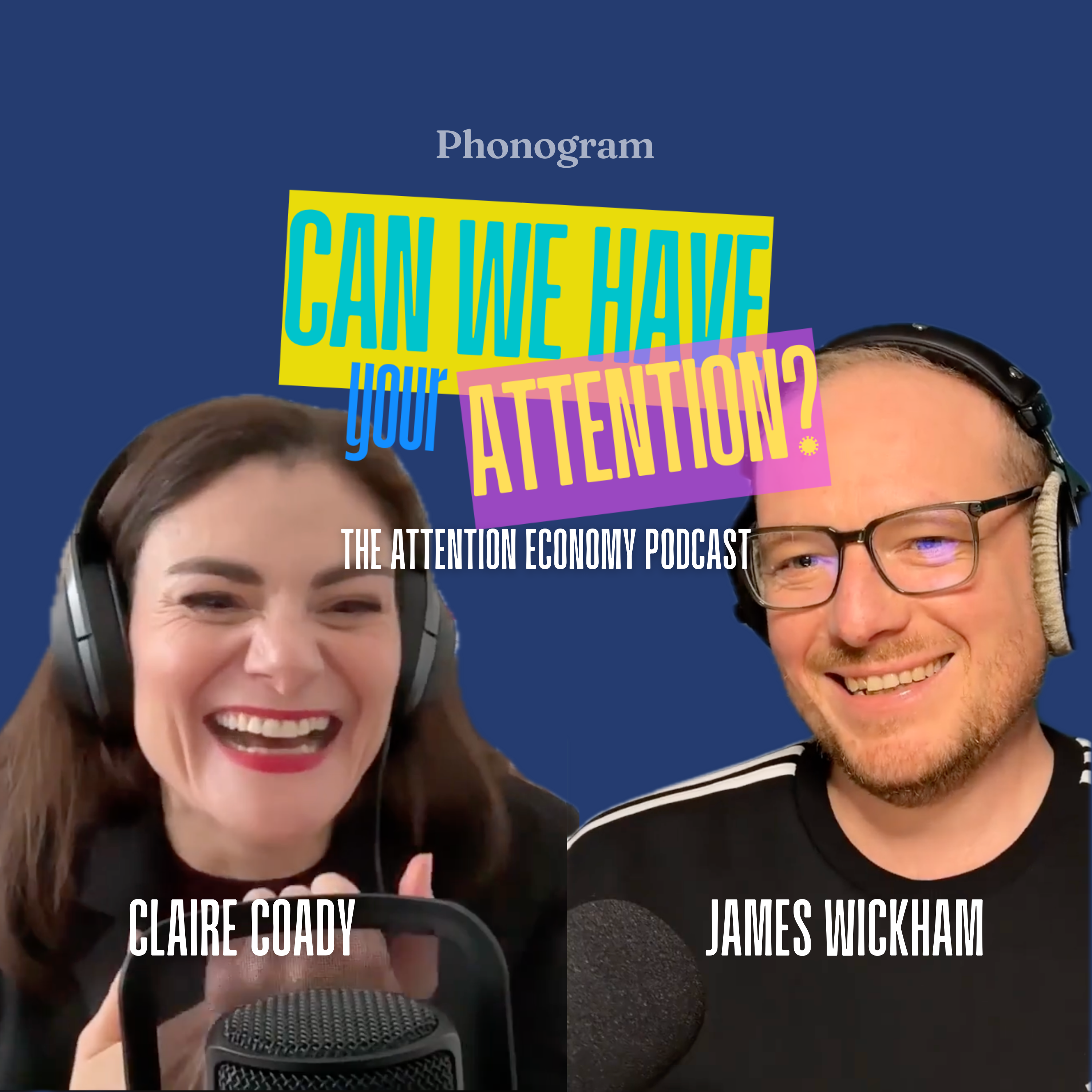
In this episode, Claire Coady and James Wickham sit down with Dr. Stephen Herron, a marketing and advertising expert at Queen’s University Belfast and White Hawk Marketing. Stephen specialises in deconstructing the sophisticated narratives and messaging strategies used to recruit young men into violent organisations.
We move beyond the politics to look at the marketing mechanics of terror. How do these groups build a "value proposition"? How do they co-opt mainstream brands as status signals? And in an attention economy designed to keep us scrolling, how do we spot the recruitment funnels hiding in plain sight?
What We Cover:
The Value Proposition of Terror: What are these groups actually offering young men? (Hint: It’s often about belonging, status, and purpose, not just ideology).
Marketing Funnels: How recruiters use standard marketing tactics to groom audiences.
Brand Hijacking: How luxury and sportswear brands get co-opted by extremist groups as signals of rank and status.
The Lesson: What legitimate brands and platforms can learn from the resilience of these networks.
Resources & Links
Connect with Dr. Stephen Herron:
Profile: linkedin.com/in/dr-stephen-herron-69a00440
Wild Hawk Marketing: https://bewildhawk.com/
Research: https://www.qub.ac.uk/Research/GRI/mitchell-institute/news/28052025-JihadiNarratives.html
Further Reading & References:
Meet the 85%: https://www.meetthe85.com/
Going Dark by Julia Ebner: https://uk.bookshop.org/a/16591/9781526616791
Excellent episode of Derek Thompson’s podcast ‘Plain English’, with Adam Mastroiani, on cultural stagnation https://www.theringer.com/podcasts/plain-english-with-derek-thompson/2025/11/25/a-grand-unified-theory-of-cultural-stagnation
About The Show:
Can We Have Your Attention? is a podcast exploring the unseen forces that shape what we see, what we buy, and who we become. Hosted by Claire Coady and James Wickham, we dive into the mechanics of the Attention Economy to understand how value is created (and manipulated) in a distracted world.
Production Credits:
Hosted by: Claire Coady & James Wickham
Produced by: Phonogram https://www.phonogram.co.uk
Enjoying the episode? If you found this conversation valuable, please follow us on Apple Podcasts, Spotify, or your preferred player. Leaving a rating or review helps us break through the noise—and get the attention of more listeners like you.
More from Can We Have Your Attention?
Claire and James discuss Aaron Sorkin’s film, The Social Reckoning, a companion to The Social Network.
You can also watch this episode on our YouTube channel!
You can also watch this episode on YouTube!
Ad tech, the backbone of digital advertising, is a lucrative business. But why? Who is profiting from it? And at what cost? Claire and James are joined this week by Claire Atkin, Co-founder and CEO of the Check My Ads Institute. They discuss ad tech: what it is, how it works, why it makes money, for whom it makes money - and what the consequences are.
For the past 25 years, claims on packets of crisps have been subject to more regulation than claims in election campaigns. But that could finally be about to change. Amendments to the Representation of the People Bill promise to apply some of the UK’s strenuous - and effective - advertising standards to election advertising. We are joined by Alex Tait, ad industry veteran and founder of the non-partisan campaign organisation Reform Political Advertising, one of the groups advocating these changes. Alex, together with Benedict Pringle, set up Reform Political Advertising to change the law. What does fact-based election advertising mean in practice? How can regulation that applies to commercial brand advertising improve political trust? How long does it take to turn an idea into a law? And can turkeys really vote for Christmas?