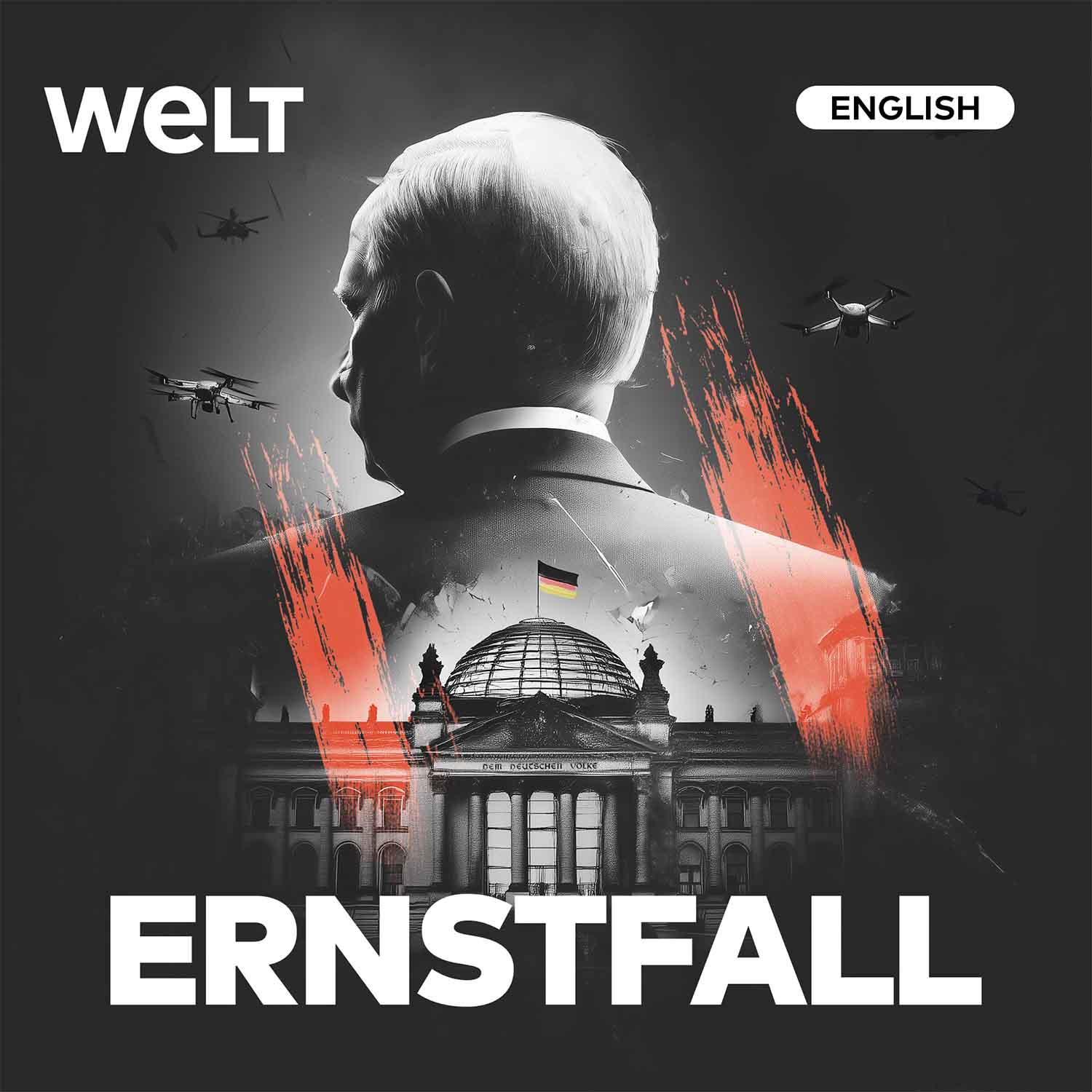
Show Notes
The wargame is heading toward a decisive moment. In our fictional scenario, Russian troops are digging in. And Europe is struggling to find a response that neither triggers panic at home nor signals weakness abroad. The overarching question is: Who is really in control of the escalation?
Episode 5 focuses on the battle for the narrative and the political costs of military decisions. A large-scale communications campaign aims to make it clear who is really attacking here and who is defending itself.
But that doesn’t change the situation on the ground. Because NATO’s most forceful option remains blocked in our simulation. While alternatives are being debated between Berlin and Brussels, a proposal is on the table that tests Moscow’s claims.
Script and Storytelling: Antonia Beckermann, Carolina Drüten
Produced by: Marvin Schwarz
If you enjoy the podcast, we’d be grateful if you could leave a rating or review. If you have questions or feedback, we’d love to hear from you at [email protected].
The participants of the wargame:
Blue Team (Germany) Chancellor: Peter Tauber Defense Minister: Roderich Kiesewetter Foreign Minister: Michael Roth Interior Minister: Irene Mihalic Finance Minister: Jörg Asmussen Government Spokesperson: Christiane Hoffmann Inspector General of the Bundeswehr: Eberhard Zorn President, Federal Office of Civil Protection: Christoph Unger Intelligence Chief: Gerhard Conrad
Red Team (Russia) President: Alexander Gabuev Chief of the General Staff: Franz-Stefan Gady Foreign Minister: Arndt Freytag von Loringhoven
International roles NATO Secretary General: Oana Lungescu U.S. Secretary of
More from Ernstfall – What if Russia Attacks NATO? Inside a German Wargame
Europe's post-war order is facing its most severe test yet in our simulation. While the fictional German cabinet searches for a way out, the Red Team playing the Kremlin has a plan ready — one that targets Germany's role as NATO's logistical hub. In the Baltic Sea, Berlin faces a dilemma, and the ministers and their advisors are forced to take a long, hard look at themselves, as the Chancellor puts it.
What happens when a looming escalation suddenly becomes reality? In our wargame, Russian troops have entered southern Lithuania, blocking the only land corridor connecting the Baltic states to the rest of NATO territory. Berlin responds, seeking to keep the state functioning. But its measures are aimed primarily at maintaining stability at home rather than confronting Moscow.
In Episode 2, Germany’s crisis cabinet tries to move from reacting to taking the initiative. The Blue Team orders military exercises in Lithuania to demonstrate resolve. But the Bundeswehr is still in the process of building up its permanent brigade there.
Imagine this: It is October 2026. The day has barely begun when Germany’s federal government is confronted with its gravest security crisis in decades. In a fictional scenario, Russia is threatening NATO’s eastern flank while the United States is reluctant to become involved.
What if Russia attacked NATO? How would Germany respond? And where are our weaknesses?